This week in the studio, I’m starting every lesson with focused rhythm practice. Truly understanding how to accurately count rhythm is foundational to confident, musical playing. When students only “kind of get it,” they often struggle with both accuracy and confidence — even when the notes themselves are correct.
We begin by reviewing where each student currently is with rhythm. I ask questions like: How do you count eighth notes? What kind of rest is this? How many beats does a dotted half note receive? This quick review helps me identify areas of strength as well as any lingering confusion.
To support this work, I use my rhythm flip chart, where each section represents one beat. This visual tool helps students see how different note and rest combinations fit within a single beat. I love using it because it allows us to isolate specific challenges — for example, recognizing how an eighth note fits between two sixteenth notes — and address them clearly and confidently.
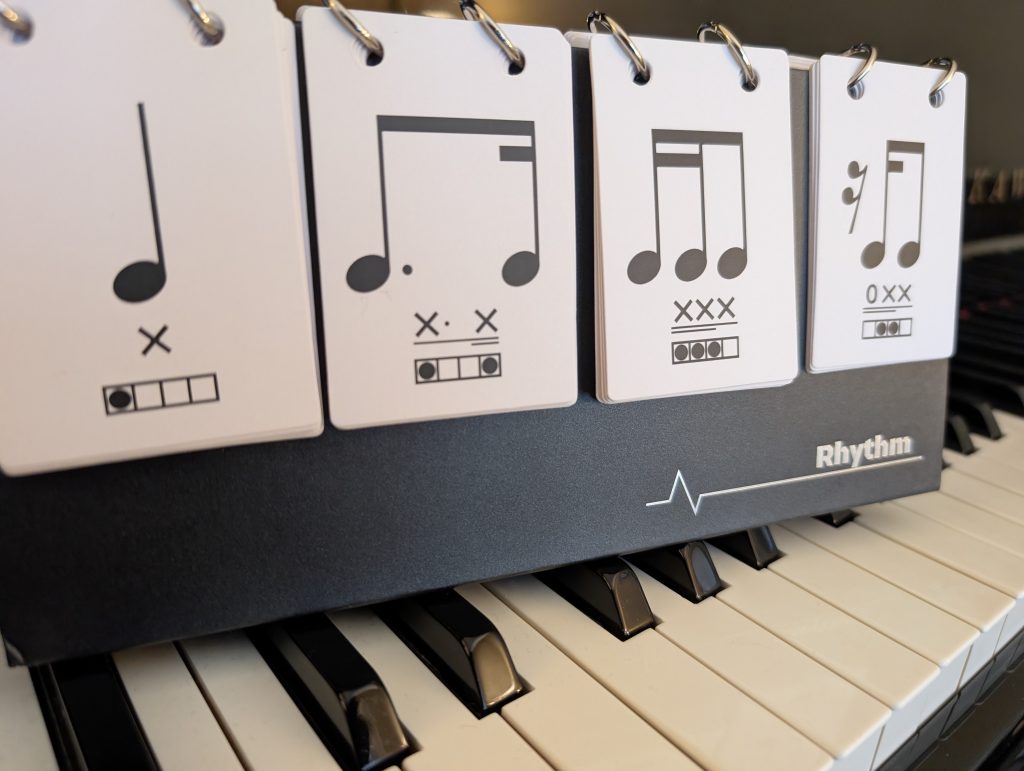
Next, students practice counting and clapping short musical passages (usually four to six measures) while I provide a steady beat. The steady beat is essential; without it, many students tend to give all notes the same value or stop and start as they read. Counting and clapping can feel awkward or challenging for some students, and it’s not always a favorite activity — but it is an important skill for any musician who truly understands how to read music.
Finally, students write in the counts for several measures of music. While similar to counting and clapping, writing in the counts is an especially helpful practice technique for learning and remembering more complex rhythms. Visually seeing the counts — including parentheses around syncopation or tied notes — often brings clarity and reinforces understanding in a lasting way.

Strong rhythm skills lead to confident playing, and confidence allows students to enjoy their music more fully. By taking time to slow down and really understand the beat, students build a foundation that supports everything else they do at the piano.