As another studio year comes to a close, I decided to try something new: I asked my students for feedback.
During the last few weeks of lessons, students completed a studio survey about their favorite activities, lesson content, motivation, and ideas for the future. I hoped it would give me a little insight into what they enjoyed most this year.
What I didn’t expect was just how helpful — and eye opening — it would be.
One of the clearest themes in the responses was that students want more opportunities to perform. While our annual recital is always special, many students expressed interest in additional, lower-pressure performance experiences throughout the year.
Because of that, I’m excited to add several new opportunities next year, including a nursing home performance visit and a masterclass with a local composer. My hope is that students will not only grow more confident performing, but also experience music as something that connects us with other people and communities.
Another strong theme was connection within the studio itself.
Many students said they would love more interaction with other students, which inspired a new monthly performance group. Each gathering will have a different musical theme — everything from movie music to jazz to French Impressionist music. Students will be able to perform for one another, hear new styles of music, and simply enjoy being part of a musical community together.
One of my favorite parts of the survey was asking students to choose their top three favorite studio activities from this year.
The clear winner? Secret Santa!
Other favorites included Practice Bingo, Bring a Buddy Week, and the annual Art Contest. Apparently, however, the Morning Practice Challenge was not nearly as beloved as I imagined when I created it!
I also invited students to suggest ideas for next year, and several of those ideas are already making their way into studio plans.
One student suggested a Parents Week, where students can perform or even play duets with a parent during lessons. I absolutely loved this idea and can’t wait to try it.
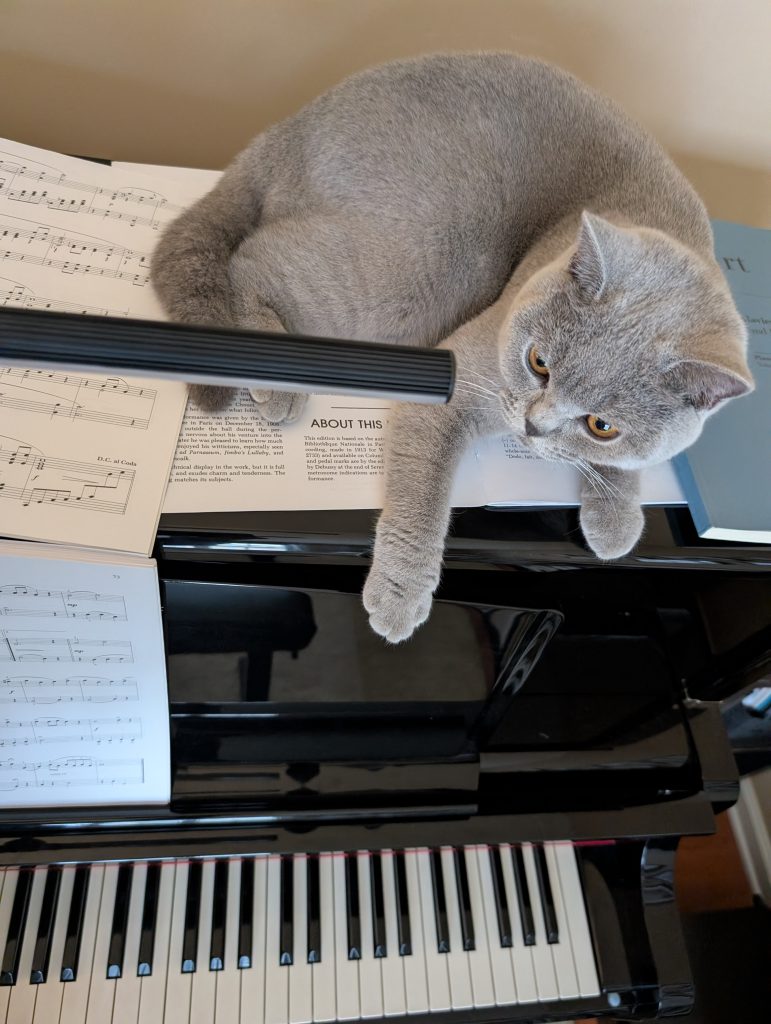
Another surprising trend? Multiple students requested that my cats become “more involved” in the studio somehow. While my real cats may not be the most reliable teaching assistants, their suggestions inspired a new idea: a studio mascot! Next year, a stuffed cat modeled after one of my cats will travel home each week with a different elementary student to encourage consistent practice habits and celebrate musical progress.
I also asked students what motivates them most in piano lessons. I expected answers like prizes, recitals, or games — but the most common response by far was getting to play music they actually love.
Honestly, I should have known.
Students are most engaged when they feel connected to their music, whether that means movie themes, pop arrangements, video game music, jazz, classical favorites, or worship songs. Their responses were a good reminder that motivation and enjoyment matter deeply in long-term musical growth.
Finally, I asked students about lesson content itself: repertoire, technique, ear training, and theory.
One thing that surprised me was how many students wanted more theory instruction. Because lesson time is always limited, theory books have not consistently been part of my curriculum in recent years. But after seeing the responses, I realized students genuinely want a stronger understanding of how music works — not just how to play the notes on the page.
As a result, most students will begin incorporating theory books into lessons next year.
This survey turned out to be one of the most valuable planning tools I’ve used in a long time. It gave students a voice, helped me see the studio through their eyes, and sparked several ideas I never would have developed on my own.
Most importantly, it reminded me that a piano studio is more than weekly lessons. It’s a community — one that grows best when students feel heard, connected, challenged, and inspired.
And apparently… occasionally accompanied by cats.