I started this studio year by planning several challenges for my students. Challenges designed to encourage progression through practice in varied ways. I have been thinking of these challenges as experiments – the results of which give me information into how my students practice, what motivates them, and a more detailed look into their strengths and limitations.
This past week we just finished a 3-week experiment – the “Practice Your Age Challenge”. I read about a teacher doing something similar, and took the idea of structuring practice around a set time and designed it for my studio.
This was basically my way of introducing the Pomodoro Technique to my students. The idea is simple: you work for a short, set amount of time, take a short break, and then repeat. Using a timer helps create a clear beginning and ending to practice, which can make it feel more manageable and less overwhelming. It also encourages real focus for a short stretch, instead of distracted or rushed practice. In other words, it gives students a way to practice with intention, without feeling like they have to sit at the piano forever. Sounds great, right?!
All of my students who are 18 or under were given a colorful timer to take home and told to set it to their age (a 10-year-old would set to 10 minutes), choose a piece to work on, and practice it until the timer went off. I gave everyone a tracking sheet to record the number of blocks they did each week, and the piece they worked on.
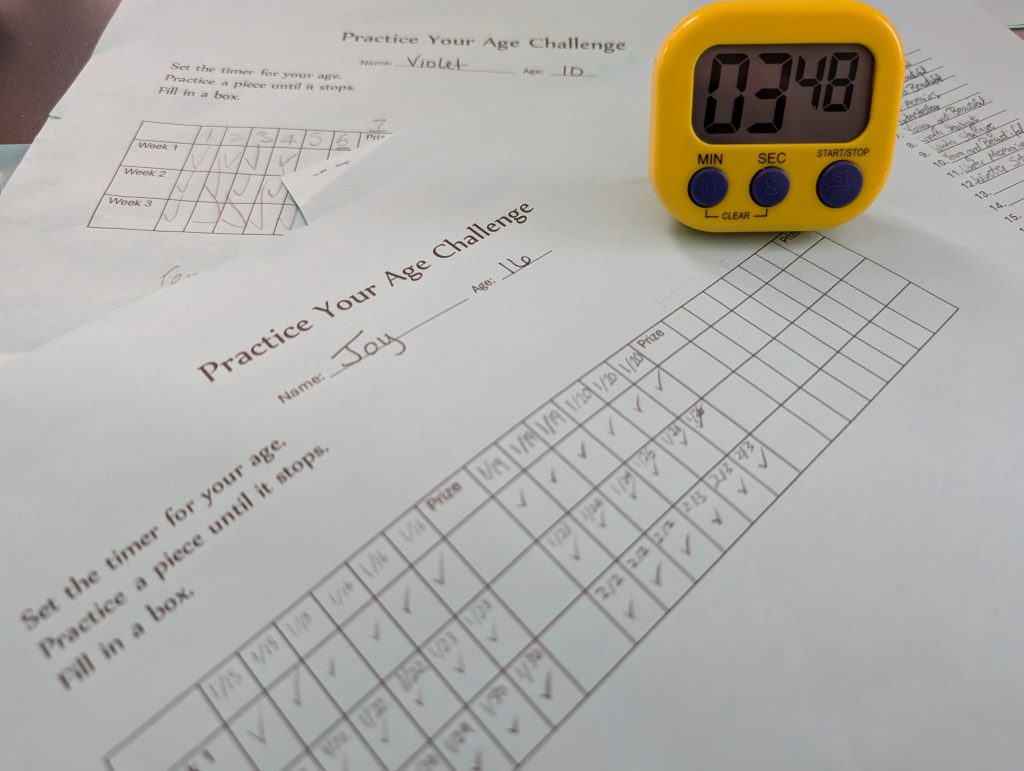
To add some motivation, for every six blocks completed students got a different fun piano pin that I put on a canvas bag for them. To complete the challenge, I was looking for students to average 6 blocks per week.
About a quarter of my studio completed this challenge, which I was a little surprised by. I’ll start by talking about the group that didn’t even try it – which was also about a quarter of the studio. These students ranged in age from 8 to 14, and could be broken into two groups – those who “couldn’t remember” to do it, and the ones who believed that trying to do something for that many minutes just felt impossible. I had all of them do 1 block in lessons, just to show them how that it’s possible and that they could.
About half of the studio tried it (ages 5-18), and didn’t like it. The main reason: they prefer to just “jump around” in their practice, and not go too in-depth into any one song. The reported lack of focus and repetition in practice was giving me important information into why so many of my students progress very slowly. As a teacher, I don’t get to see how my students truly practice at home, and usually have to rely on self reporting, which often doesn’t add up to what I’m seeing.
Finally, about a quarter of the studio met the challenge (ages 8-17), and did around 6 blocks a week or more. One 17-year old student who has been struggling with practice all year was very successful with this, saying that just working for 17 minutes, and then taking a short break made piano feel more manageable. One 10-year-old student said that she never usually stays on a piece that long, but did it for the challenge, and she noticed how the repetition that she doesn’t usually do helped with memorization on a piece that she will be performing in a few weeks, as well as smoothing out some difficult sections of pieces. Finally, one 9-year-old student said it felt like a game, and made practice feel more fun.
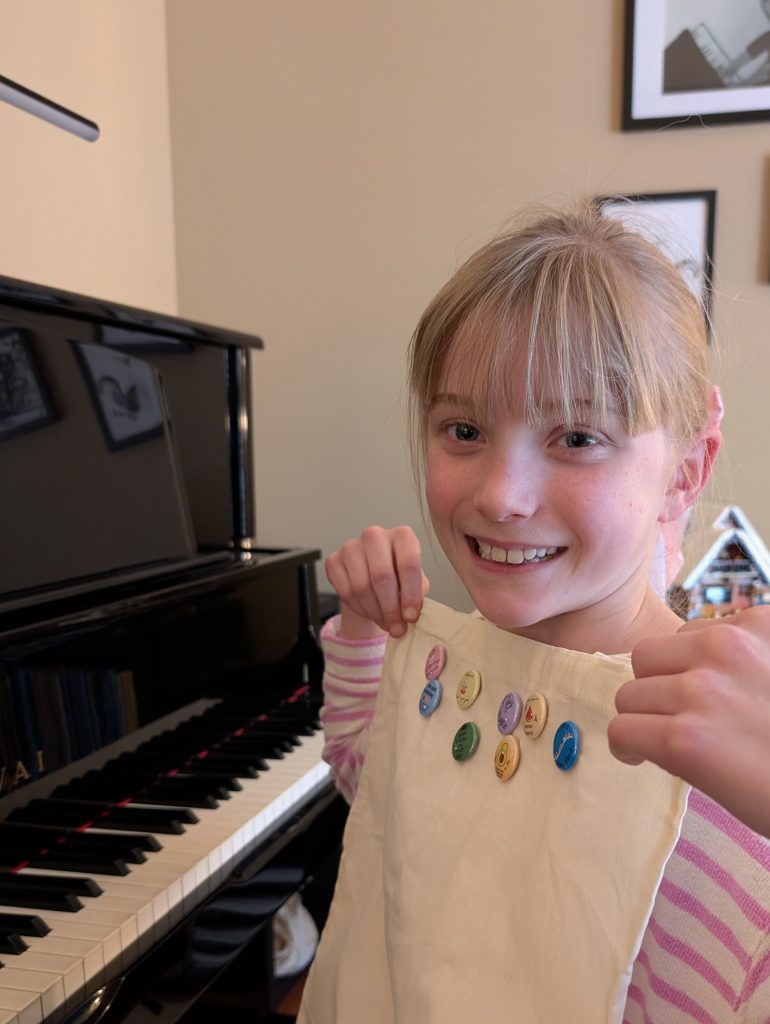
After wrapping up this experiment with my students I urged students to try this technique when they are facing something that feels overwhelming or having trouble getting motivated to do something – in piano or any other area of their life. For me, this challenge was also a valuable reminder that there is no single “right” way to practice, but there are habits that make learning more effective. Seeing how differently my students responded helped me better understand who needs more structure, who needs help building focus and stamina, and who benefits most from clear, manageable goals. That information will directly shape how I guide practice and set expectations in lessons moving forward.