This week I read an article in The Atlantic titled Stop Meeting Students Where They Are, and I haven’t stopped thinking about it. It opened with “At some point over the past 15 years, kids stopped reading. Or at least their teachers stopped asking them to read the way they once did. We live in the age of the reel, the story, the sample, the clip. The age of the excerpt. And even in old-fashioned literature classes, assignments have been abbreviated so dramatically that high-school English teachers are, according to one recent survey, assigning fewer than three books a year.”
As a piano teacher, this felt uncomfortably familiar. I believe deeply in meeting students where they are. I do this every week – emotionally, developmentally, and musically. Every student comes into my studio with a different background, attention span, confidence level, and relationship to practice. I adjust constantly. But I also live in a world where some kinds of learning simply cannot be shortened without changing what they are. Piano is one of those things.
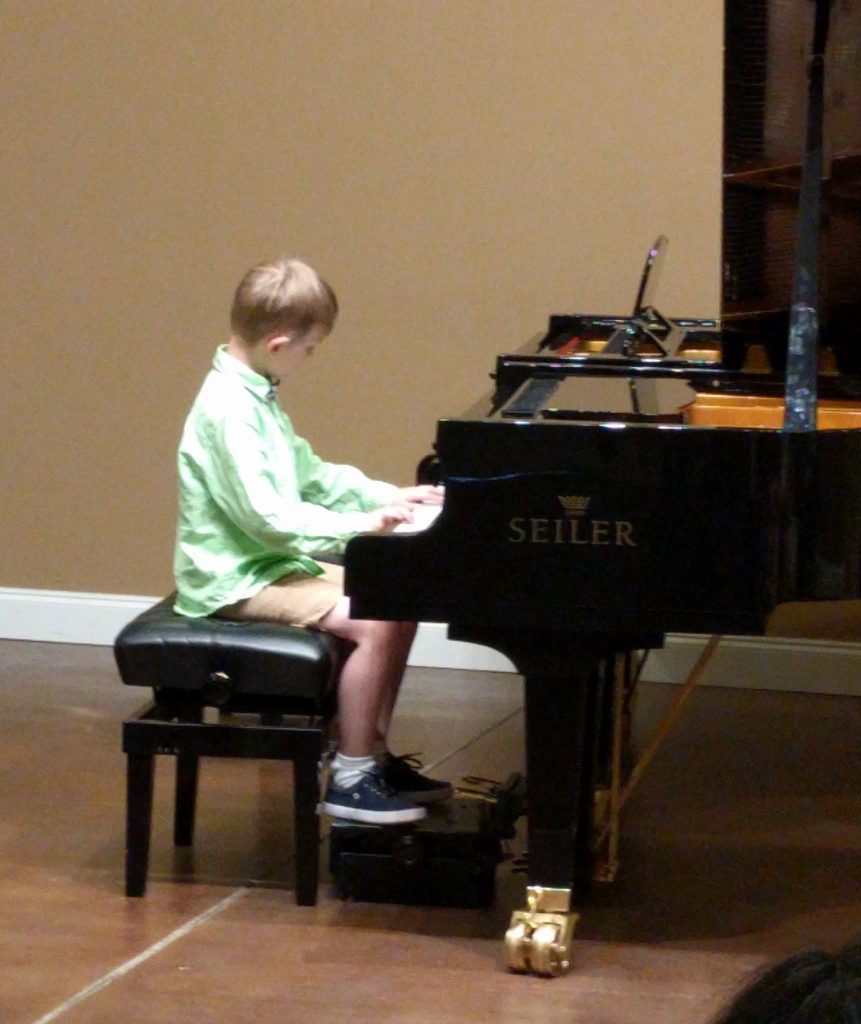
Over the past ten years, I’ve noticed something that honestly still makes me a little sad. Only a small percentage of my students, maybe ten percent, if I’m lucky, end up being patient enough to truly engage with traditional piano repertoire: music by Bach, Beethoven, Chopin, or Brahms.
For a long time, I wondered if that was a reflection of my teaching. But the more I teach, and the more I pay attention to how my students experience learning in general, the more I realize something important: traditional piano repertoire is not built to be immediately rewarding. It is slow to reveal itself. It asks for repeated work on very small details. It doesn’t sound impressive right away. And it doesn’t “click” quickly for most learners. In other words, it doesn’t fit well into a world built around clips, samples, and quick wins.
In my lessons, I hear things like: “This is hard.” “This is taking a long time.” “I don’t really like this piece.” And those are honest reactions. But what I often want students (and parents) to understand is this: In piano, struggle is not a sign that something is wrong. It is very often a sign that something is working.
The Atlantic article argues that students didn’t suddenly lose the ability to read long, complex books, but instead educators slowly stopped asking them to do it. That idea really challenged me because in piano, I see a similar tension. It would be easy to choose only short, instantly satisfying pieces, or avoid music that takes months to feel good. But if I only meet students where they are and never ask them to stay with something long enough to grow beyond that place, I quietly take away one of the most meaningful parts of learning music. Traditional repertoire doesn’t meet students where they are. It invites them to become someone else. Someone more patient, more attentive, more resilient, and more willing to work through repetition.

I don’t expect every student in my studio to grow up loving Bach or Chopin. What I do hope is that every student experiences what it feels like to stay with something long enough for it to become meaningful, not just manageable. So yes, I will continue to meet students where they are, but I will also continue to encourage them to work in a way that might feel more challenging than what they are accustomed. Because in a world built for the excerpt, learning how to stick with something for the long haul is a skill worth protecting.