As a pianist, there are times when I’m deeply immersed, and times when I step back. I tend to throw myself into projects and repertoire for a while and then allow space for a break. I’ve been on one of those breaks for the past year.
When I’m on a break, I will inevitably start to really miss practicing. I’ll miss the process of working through a composition. The repetition. The feeling of satisfaction when my body and brain are working together in a way that they couldn’t before starting.
When I decide it’s time to jump back in, I get to do something I really enjoy: choose what I want to work on. There isn’t one right way to do this or a “correct” number of pieces, but I usually like to have three or four pieces going at once. It matters to me that they come from different time periods and offer different levels and types of challenges.
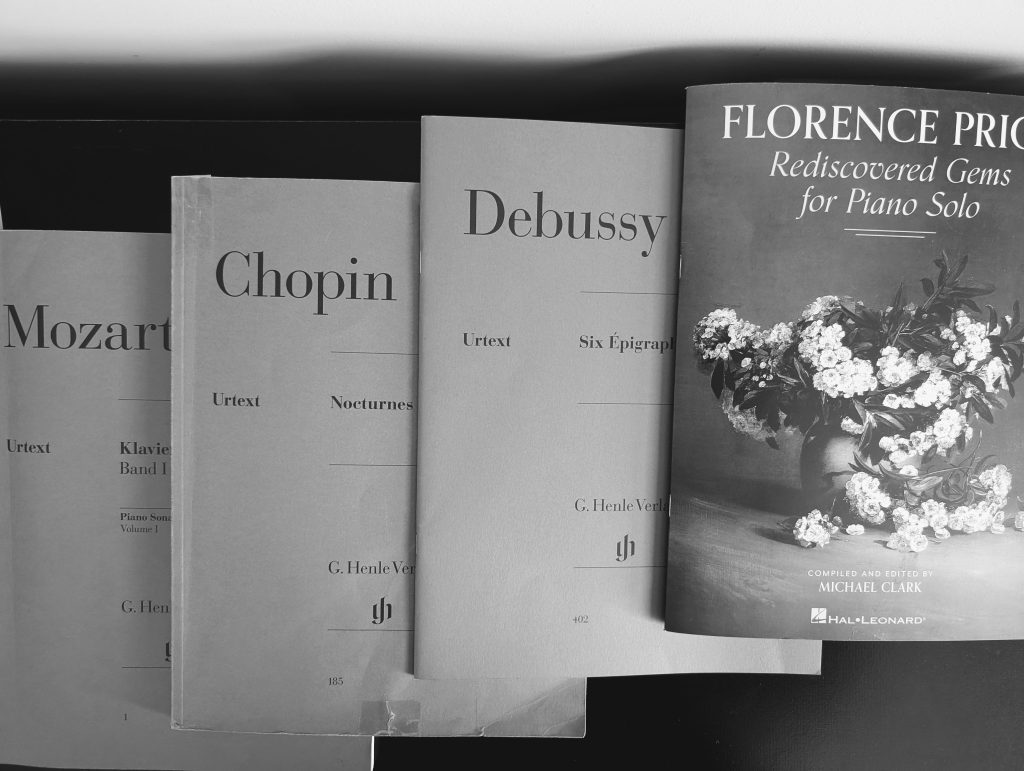
Starting with the oldest piece: I decided on Mozart’s Sonata No. 2 in F major. I love the whole piece, but it made the cut because of its second movement. It’s Mozart’s only piano sonata with a slow movement in a minor key, and there is something especially beautiful about Mozart’s minor compositions. This will probably be the least technically demanding piece on my list, but I know the process of working through it will be rewarding.
Next, I move into the early Romantic period with Chopin’s Nocturne in E-flat major, Op. 55, No. 2. The harmony and voicing are just unusual enough to be a real musical challenge without feeling overwhelming. And honestly, t’s simply gorgeous. I’ve never played it before, and that alone makes it feel like a small gift to myself.
After choosing two pieces that lean heavily into expression and sound, I knew I needed something that would really stretch me technically. That brought me to a composer I have a complicated relationship with: Debussy. I struggle to get into his music, and I let that bother me more than it should due to his mainstream appeal. I recently watched the HBO series Somebody Somewhere (which I loved, by the way!), and in one episode there was a music discussion that ended with “If you don’t like Clair de Lune, you’re an asshole.” I very much do not want to be an asshole. So, I keep trying. This time, I’m diving into his ninth prelude, La sérénade interrompue. It will absolutely require slow, patient work. The textures, rhythms, and colors don’t come easily to me, but that’s exactly why it belongs on this list.
Finally, I arrive in the 1930s with the underrated Florence Price. I’m starting with one of her miniatures, Southern Sky. I want to become more familiar with her music so I can share it more confidently with my students. I love how her writing brings together classical tradition with folk and jazz influences, and how naturally those worlds coexist in her voice.
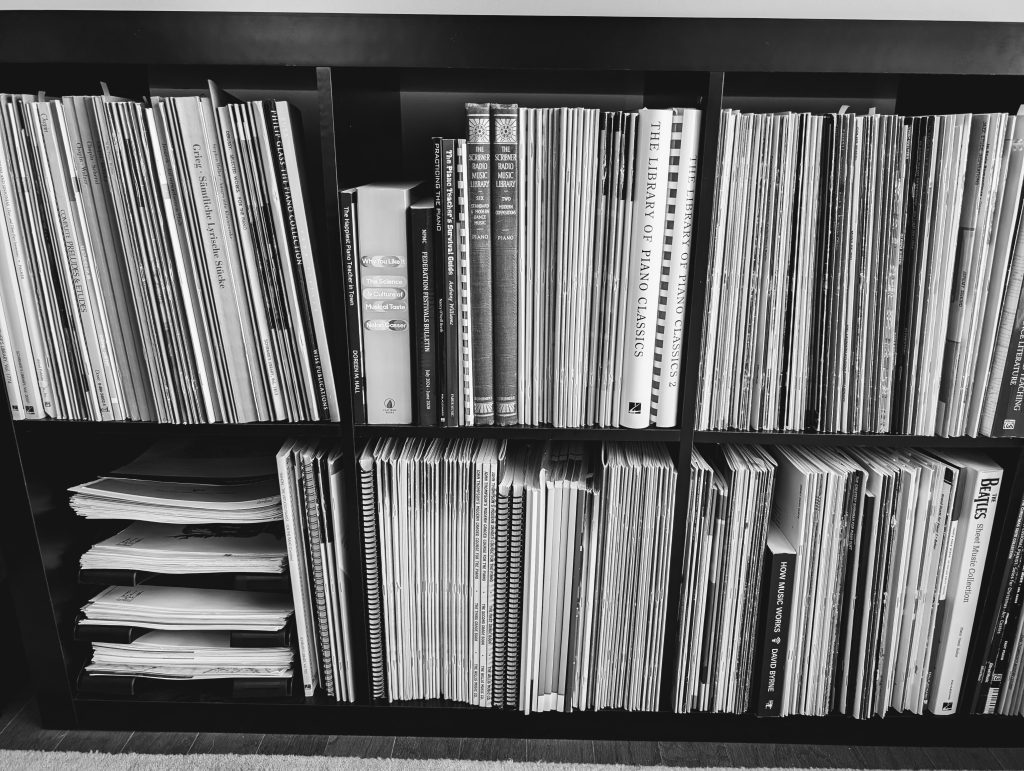
Over the next few weeks, I’ll spend time with these pieces and then reach out to my teacher to get some lessons scheduled. No matter where one is on their piano journey, I truly believe having another set of ears on your playing matters. Even when we listen carefully and think deeply about our own work, there is always another perspective and always something more to learn.
Choosing my music has already been so much fun. But what I’m most excited about now is the best part: sitting down, opening the score, and jumping in.